
Case study · Utilities & Energy
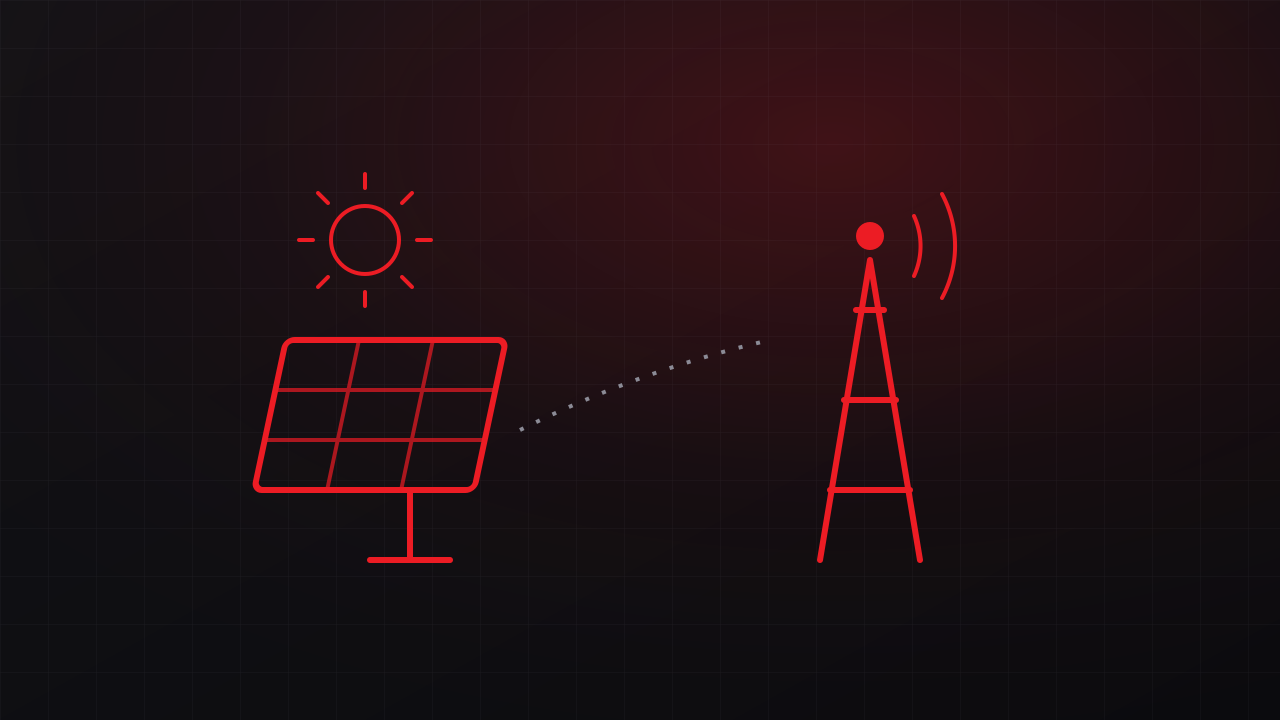
Solar-Powered Telecom for Remote Sites
Engineering self-sufficient, solar-powered telecommunications systems that keep remote operations connected where there is no grid power and no carrier service.
GTech Engineering Team · Remote sites, California Central Coast ·
Outcomes
- Off-grid telecom sites running on engineered solar power systems
- Battery capacity sized for worst-case weather data
- Remote monitoring so problems are seen before they become outages
The challenge
Some of the most important telecom links terminate in places with no power, no fiber, and no cell coverage: hilltop relay points, remote well sites, agricultural operations far from the nearest utility pole. Extending the grid to these sites can cost more than the equipment it would power.
What we did
GTech engineers complete off-grid telecom systems as a single integrated design:
- Power engineering. Solar arrays, battery banks, and charge control sized from actual load calculations and local weather data, including the foggy Central Coast winters that ruin optimistic estimates.
- Radio engineering. Point-to-point and point-to-multipoint links planned with RF surveys and field measurements.
- Environmental hardening. Enclosures, mounting, and thermal design appropriate for exposed sites that only get visited a few times a year.
- Monitoring. Battery voltage, link status, and site health reported over the link itself, allowing teams to schedule service when performance starts to degrade.
Why it matters
Off-grid telecom fails at the intersections: the radio vendor blames the power, the power vendor blames the radio. Because GTech engineers both halves, there is one design, one point of accountability, and one team to call.